
Health and Care Research
What is health and care research and why is it important?
We are committed to our population living happier and healthier lives. Research is one way that we can make this happen by providing the evidence to improve treatments and care. This could be by testing new medicines or vaccines or by completing questionnaires to help us understand how people feel about the care they receive.
Benefits to taking part in research can include learning more about your health or receiving closer monitoring. Taking part in a project may not always help you directly, but you will be helping to improve services and treatments now and in the future.
Health and care research adds to our knowledge and understanding about diagnoses, treatments and care, and people’s lived experiences. This knowledge helps us to deliver better services and contributes to the best health and wellbeing for people. Publishing the learning from research widely can positively impact health and care locally, regionally, nationally and internationally.
There is a specific need to increase the diversity of people who get involved in research, both as research recruits, and in study design. We know there is a prevalence of white, older people who get involved in research. Without diverse participants in research, there is a risk that research outcomes will not be as effective across diverse population groups and that research trials will not be designed to meet the needs of a diverse population.
Research Engagement Network
The Research Engagement Network supports and champions the involvement of patients and the public in research, working with volunteers and Voluntary, Community, Faith and Social Enterprises (VCFSEs) across all stages of the research process, and providing advice and guidance to researchers on good practice.
The team also work to raise the profile of research to encourage participation in and engagement with research studies by working with local communities. In collaboration with our system partners we are delivering an NHS England funded initiative called Research Engagement Networks (REN).
Our local Research Engagement Network is coordinated by the Norfolk and Suffolk Integrated Care Board (ICB), the Regional Research Delivery Network (RRDN) and in collaboration with Thinklusive.
This initiative creates a platform for researchers to exchange experiences, foster learning and support under-represented groups to participate in research.
The Network:
- Builds a local research environment that is supportive and inclusive for our diverse communities.
- Builds trusting, mutually beneficial relationships with the community and VCFSE sector.
- Listens to, and understands, local communities better.
- Collaborates with community members and organisations to make research more inclusive and representative.
- Highlights the need for making reasonable adjustments within research happening locally.
- Provides a check and challenge to local research teams to create more accessible research.
- Offers input, ideas, and recommendations to teams at all stages of the research process.
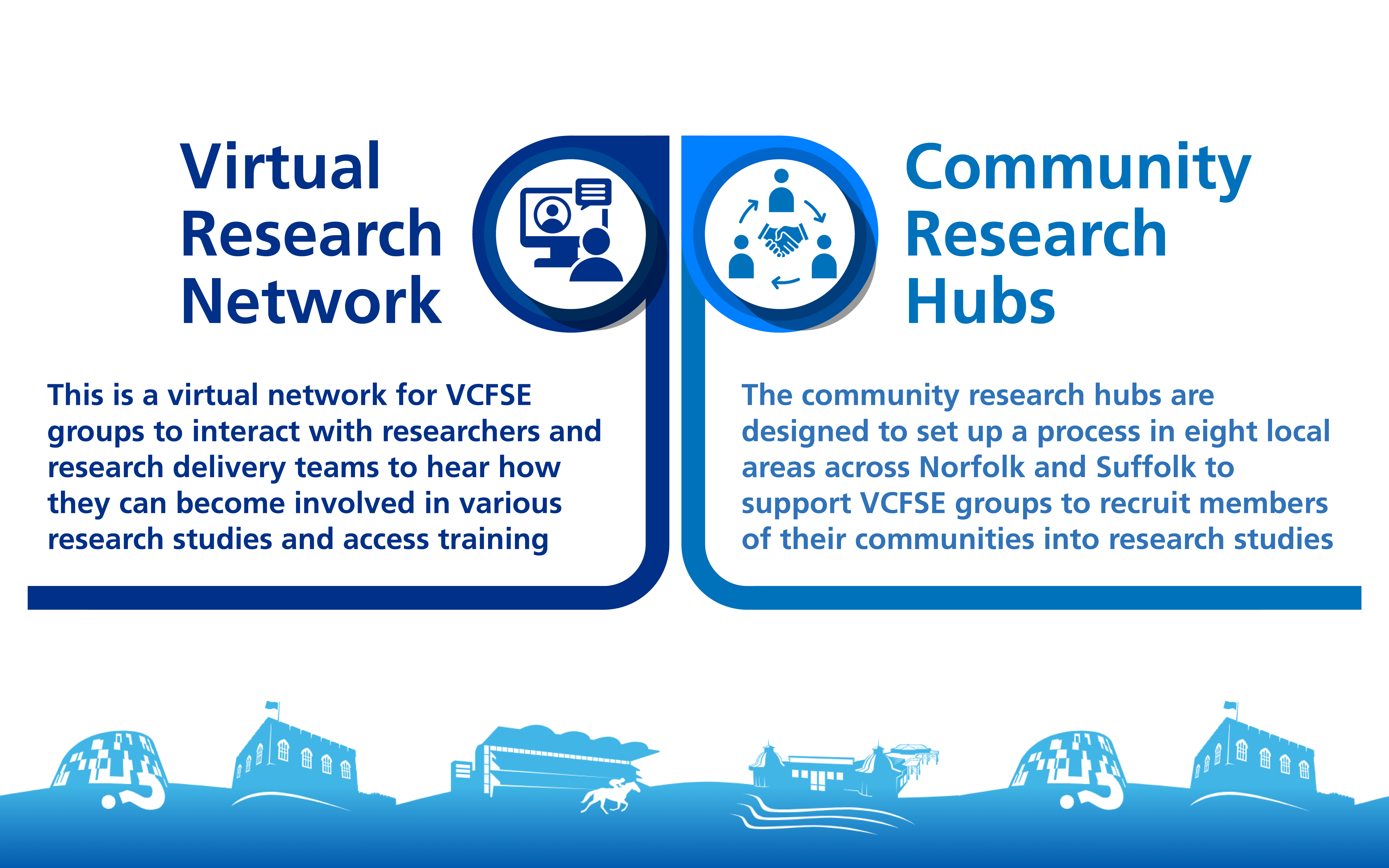
The Research Engagement Network for Norfolk and Suffolk comprise two key elements: the virtual network and community research hubs. These are funded jointly by NHS England and the Regional Research Delivery Network.
Virtual Network
What is it?
This is a virtual network for VCFSE groups to interact with researchers and research delivery teams to hear how they can become involved in various research studies and access training.
What does it do?
The purpose of the network is to highlight research projects to VCFSE groups that are interested in research and to hear from researchers who want to engage with VCFSE groups to enhance their studies.
Max Clark (Thinklusive) chairs a meeting every two months (1 hour, online) to hear presentations from researchers and research delivery teams to highlight relevant research projects to VCFSE groups. Max also regularly shares research projects via email so that VCFSE groups can take part in research if it is relevant to them.
Who can attend and take part?
This network is open to anyone interested in research across Norfolk and Suffolk, working in a VCFSE organisation. You do not have to have any previous experience of research. We know research can be intimidating, and there is usually lots of conversation between colleagues. These meetings are informal, and it is ok to just listen to the conversation.
What do I need to do to join the network?
Please complete the survey below to register to receive emails and the dates of upcoming meetings.
Community Research Hubs
What are they?
The community research hubs are designed to set up a process in eight local areas across Norfolk and Suffolk to support VCFSE groups to recruit members of their communities into research studies. This is important as it makes research more representative of the population and gives access to new treatment approaches that wouldn’t have been available previously.
What do they do?
Each of the hubs is a collection of around three VCFSE groups that have come together to form a core group. Currently, hubs are up and running in Great Yarmouth, Thetford, Waveney, King’s Lynn and Norwich. The VCFSE groups work together with the Integrated Care Board (ICB), Regional Research Delivery Network, Community Action Norfolk and other partners to find ways in which they can recruit members of their communities into research studies or they can support research nurses to run clinics in their community spaces.
To support the hubs, the ICB brings together all partners with the VCFSE groups that are leading each hub once a month to share learning and find out what support is needed.
Who can take part?
Once hubs are established, VCFSE groups in those areas are advised to contact their local hub in the first instance to see how they can get involved. Information on the local hubs can be obtained by contacting nwicb.researchinnovation@nhs.net. We are in the process of establishing three new hubs across Suffolk and the process for this is being led through the virtual network.
Get Involved - Be part of Research
Be Part of Research is a UK-wide service that helps people understand what research is and what it might mean to take part. It also shows what research is currently happening across the UK.
You can create a free account or search for trials and studies into health conditions you’re interested in, at locations near you. See video below for more details. The link to sign up is: https://bepartofresearch.nihr.ac.uk/
-
Help shape pregnancy research

Help shape pregnancy research: a message from Sophie Dann, research fellow at the University of Birmingham
I'm a researcher looking for women or birthing people who have been pregnant under the NHS within the last 5 years and experienced difficult social/life circumstances during pregnancy (for example housing difficulties, money worries, lack of support, social services involvement, addiction, or similar challenges).
I'm developing a research project to improve how midwives ask women about these issues, and I'd love to hear your thoughts on my plans. This would involve just 1 phone/video call.I won't ask you to tell me about your personal circumstances - I'm interested in your views on the research itself.
You'll get a Love2shop or Amazon voucher as a thank you for your time and contribution.
If you're interested, please click for more info and to sign up: https://form.jotform.com/261474257144054 -
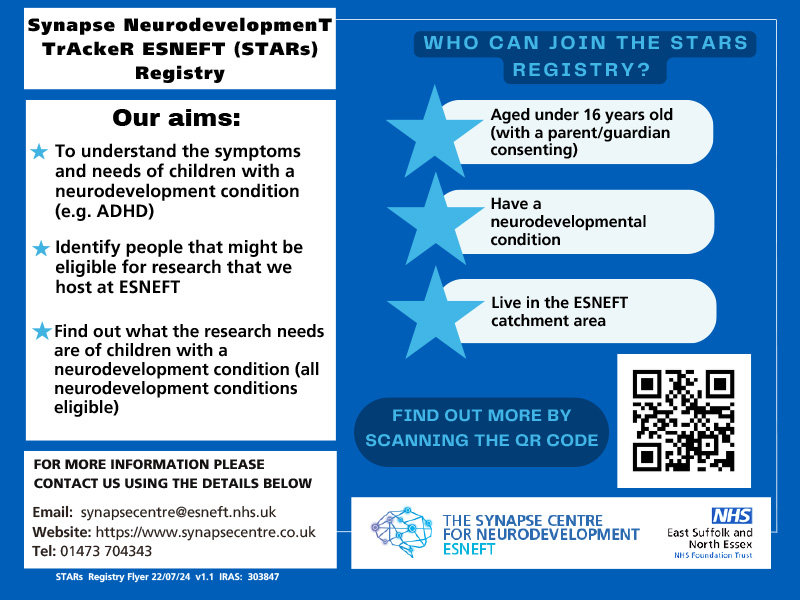
Synapse NeurodevelopmenT TrAckeR ESNEFT (STARs) Registry
Synapse NeurodevelopmenT TrAckeR ESNEFT (STARs) Registry
Our aims:
- To understand the symptoms and needs of children with a neurodevelopment condition (e.g. ADHD)
- Identify people that might be eligible for research that we host at ESNEFT
- Find out what the research needs are of children with a neurodevelopment condition (all neurodevelopment conditions eligible).
WHO CAN JOIN THE STARS REGISTRY?
- Aged under 16 years old (with a parent/guardian consenting)
- Have a neurodevelopmental condition
- Live in the ESNEFT catchment area.
Families who have a child diagnosed with a neurological condition can now sign up for our STARS registry.
STARS (Synapse NeurodevelopmenT TrAckeR ESNEFT) is a registry for families interested in taking part in future research studies to help discover more about the symptoms and experiences of those with neurodevelopmental conditions. To find out more, visit: https://secure.amplitude-registry.com/ESNEFT-Synapse/patient-portal/?pce=true
FOR MORE INFORMATION PLEASE CONTACT US USING THE DETAILS BELOW
email: synapsecentre@esneft.nhs.uk
Website: https://www.synapsecentre.co.uk/
Phone: 01473 704343
-
Getting Involved in Research! Health and social care research news from the East of England

Getting Involved in Research! Health and social care research news from the East of England
May 2026
Read the full newsletter, via this link: Health and social care research news from the East of England
Highlights from this month's newsletter:
Endometriosis – how research is making a difference
In the UK, an estimated 1 in 10 women and those assigned female at birth live with endometriosis. In endometriosis, tissue similar to the lining of the womb grows in other parts of the body. Symptoms include severe pain.
There are 3 different subtypes of pelvic endometriosis
● Superficial peritoneal endometriosis.
● Ovarian endometriosis.
● Deep endometriosis.
How can research help endometriosis diagnosis?
Teams around the world are looking for new biomarkers which might allow diagnosis of endometriosis with a blood or urine or saliva test. To find a biomarker, researchers need to analyse tissue samples from women from diverse backgrounds.
Read the full article or join a study on endometriosis here: http://bit.ly/4uqcVNE
More young people are suffering from anxiety and depression: how can research help?
We know that most life-long mental health issues in the UK start before the age of 25. Mental health outcomes for today’s children and young people are thought to be worse than in previous generations.
Mental health research can help to identify some of the reasons behind anxiety and depression in young people and how to ensure they get the best treatment possible.
Read about the latest research into young people's mental health and how you can get involved here: https://bit.ly/4uqEjv5
Sign up to Be Part of Research
Whatever your state of health, you can help find new and better ways to treat conditions, and improve care. You can even take part as a healthy volunteer. Your family may have been particularly affected by a specific condition, or you may have experienced an illness and want to make life better for others living with it.
Sign up to Be Part of Research today and make a difference to the health and care of tomorrow. With your help, research can go further and faster: www.BePartOfResearch.co.uk
Do you want to hear more from the East of England team?
You can sign up to receive an online email copy of this newsletter using this online link: http://eepurl.com/c8Zkmj
Alternatively, you can sign up to be sent a paper copy of this newsletter, or a large format text only version of this newsletter, in the post by writing to us at the address below or though this online link: https://shorturl.at/3bg8b
Email us: eoe.rrdn@nihr.ac.uk
Telephone us: 01603 287472
Write to us: Research Engagement and Inclusion Team, East of England
RRDN, 20 Rouen Road, Norwich, NR1 1QQ
-
Popped
POrtal for Patient and Public Engagement in Dementia research
Sharing information about Popped: POrtal for Patient and Public Engagement in Dementia research
This platform invites you to share your thoughts on research projects aimed at improving dementia care.
By gathering feedback from the public, we hope to guide research in ways that reflect the needs and priorities of people with dementia, their carers, families, professionals and anyone with experience or interest in dementia.
There are 2 surveys, which the NIHR RRDN is keen to promote locally:
1. READ OUT
https://popped.org.uk/read-out-survey/
About this project
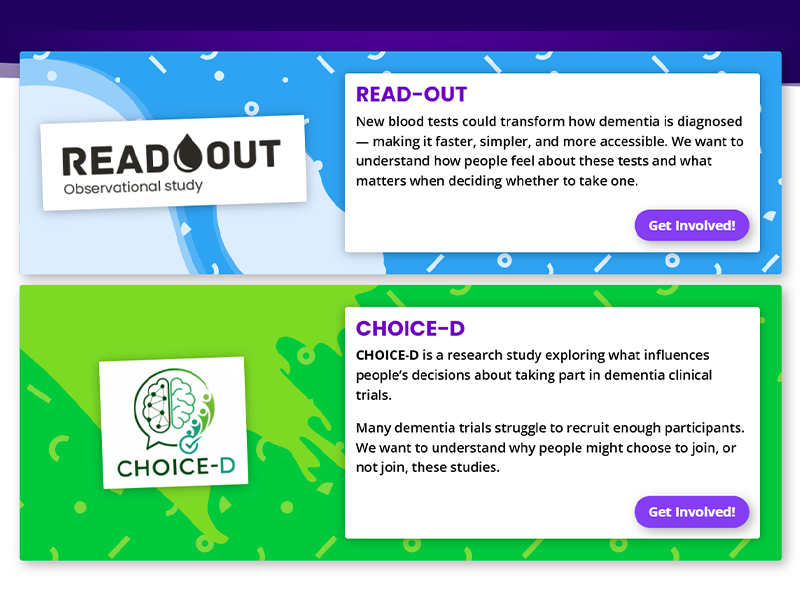
This survey is part of the READ-OUT (REAl-world Dementia OUTcomes) programme. We aim to understand public and patient views on new blood tests for dementia and other memory problems. You will be asked about whether you would consider taking such a test, and what factors influence your decision. Your responses will help ensure these tests are introduced in ways that are appropriate, acceptable, and beneficial.
2. CHOICE-D
https://popped.org.uk/choice-d-survey/
About this study
CHOICE-D is a research study exploring what influences people’s decisions about taking part in dementia clinical trials.
Many dementia trials struggle to recruit enough participants. We want to understand why people might choose to join, or not join, these studies.
-
The INGR1D2 study
What is INGR1D2 about?
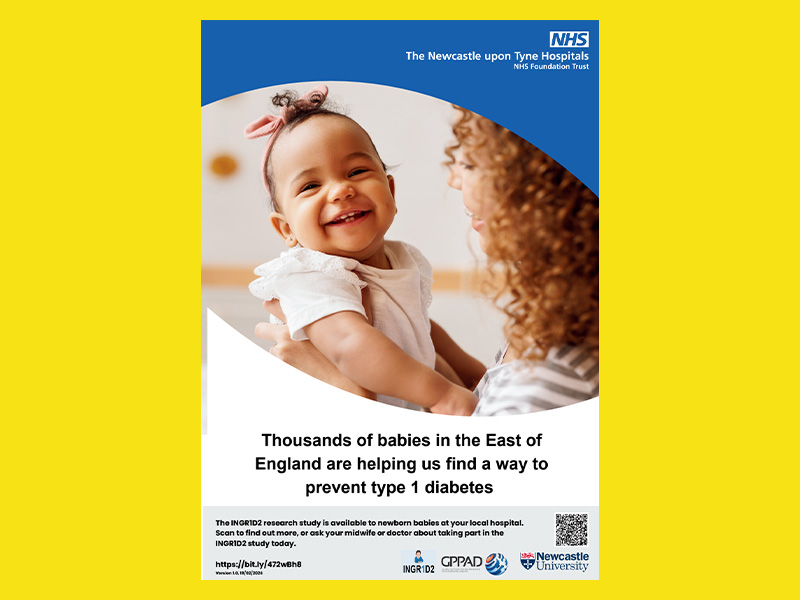
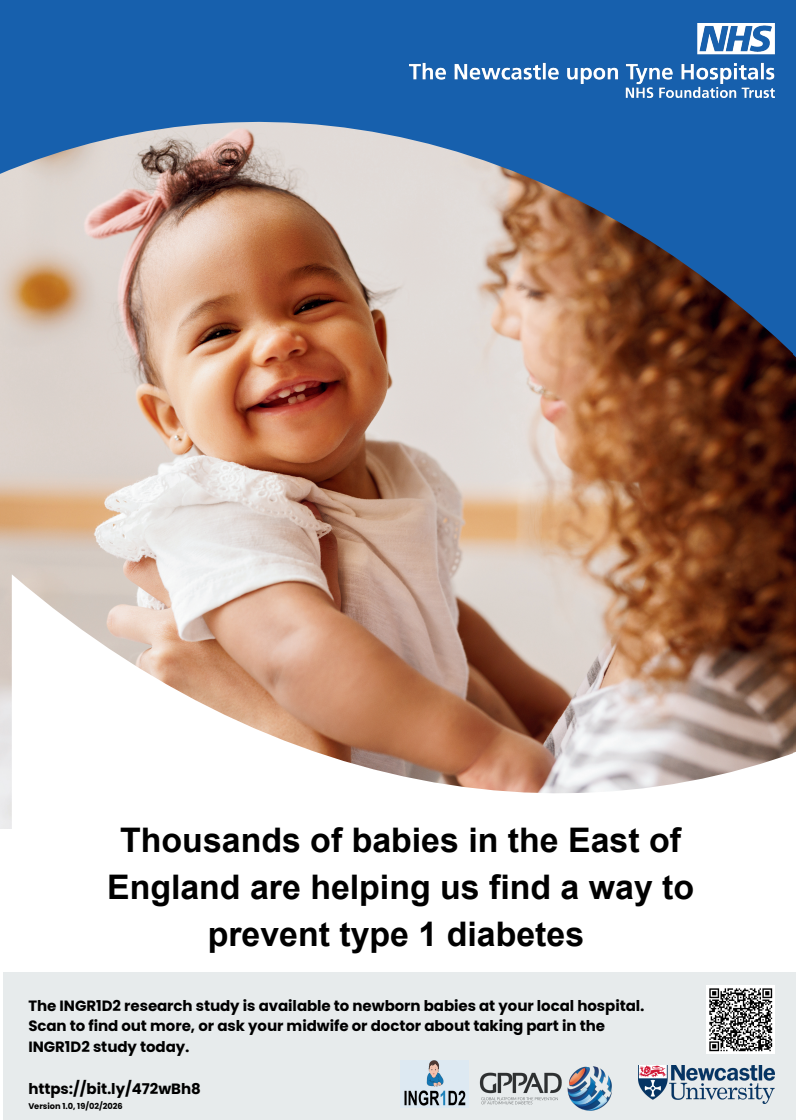
INGR1D2 - INvestigating Genetic Risk for type 1 Diabetes (2) - is an important study that aims to identify children with genetic markers that put them at increased risk of developing type 1 diabetes.Several maternity units in the East of England are offering parents the chance to involve their babies in this important study.
To date, over 36,000 babies in the UK have contributed this study which is looking at how we might prevent type 1 diabetes in the future.
East of England Sites
Cambridge University Hospital NHS Foundation Trust: cuh.rosieresearch@nhs.net, 01223 274228 | Ext: 274228
The James Paget University Hospitals NHS Foundation Trust: ResearchMidwives@jpaget.nhs.uk , 01493 452 682
East Suffolk and North Essex NHS Foundation Trust: Maternity.research@esneft.nhs.uk, 01473 703155
North West Anglia NHS Foundation Trust: nwangliaft.fissresearch@nhs.net , 01733 677918
West Suffolk NHS Foundation Trust: childrensresearch@wsh.nhs.uk, 01284 712 947
Norfolk and Norwich University Hospitals NHS Foundation Trust: Midwifery.research@nnuh.nhs.uk , 01603 289816
The Queen Elizabeth Hospital King's Lynn NHS Foundation Trust: (details to follow)
Who can take part in the study?The INGR1D2 teams are currently approaching women at participating hospitals from Monday to Friday. If you are approached by one of our researchers, you will be given all the information you need to make a decision on whether to enrol your baby. We will approach any mothers over 18 weeks of pregnancy although the point at which you might be approached may vary between hospitals, and you may be approached after your baby has been born. If you have not yet been approached about the INGR1D2 study and would like to speak to a member of your local research team, please click here to find your local contact details.
The majority of babies will be able to take part in the study; there are only few exclusion criteria. If there is a specific reason that your baby cannot participate in the study, this will be explained to you in full.
To find out more
Please visit the study website: https://sites.google.com/nihr.ac.uk/ingr1d2/home?authuser=0
-
Are you 'disabled enough'? Share your experience
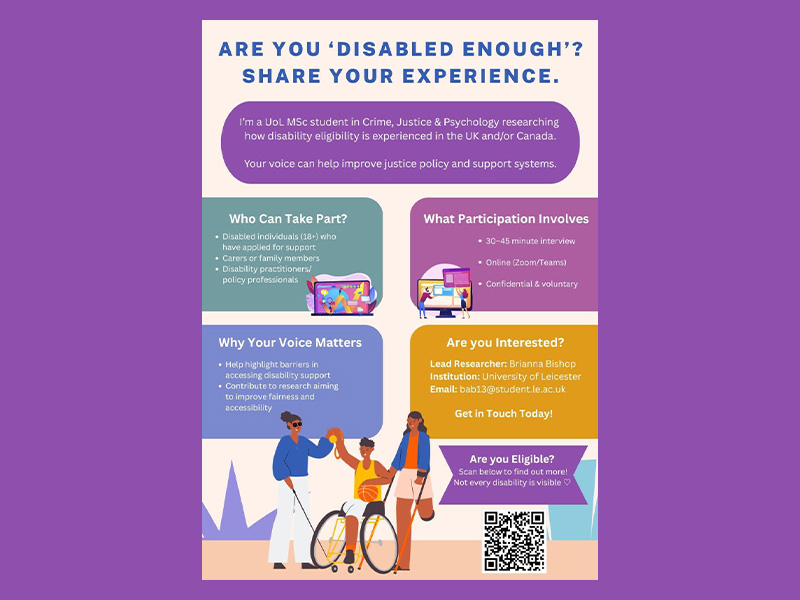
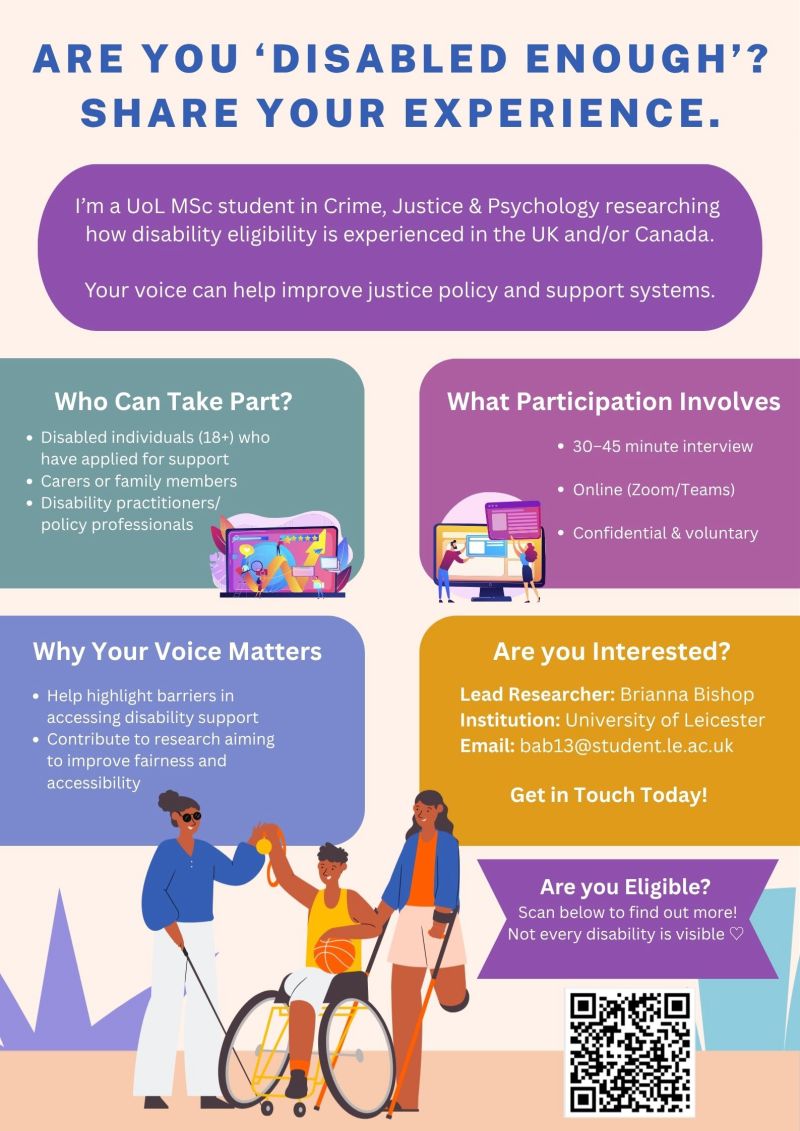
A University of Leicester MSc researcher is exploring how disability eligibility is experienced in the UK and Canada.
If you have lived experience of being disabled or an unpaid carer, or if you are a professional in this space, your insights could help shape this research.Who can take part?
- Disabled individuals (18+) who have applied for support
- Carers of family members
- Disability practitioners/policy professionals
What participation involves?
- 30-45 minute interview
- Online via Zoom or Teams
- Confidential and voluntary
Why your voice matters
- Help highlight barriers in accessing disability support
- Contribute to research aiming to improve fairness and accessibility
Are you interested?
Lead researcher: Brianna Bishop, University of Leicester
To be involved get in touch via bab13@student.le.ac.uk
-
NIHR East of England Patient and Public Involvement Showcase
Part of the NIHR East of England PPI Showcase & Discussion collectionNIHR East of England Patient and Public Involvement ShowcaseJeffrey Cheah Biomedical Centre, Cambridge, EnglandTuesday 16 June • 10:30 AM - 3:30 PM Overview
What difference does public involvement make to our research in the East of England? Come and find out!
Join us for this free in-person event for members of the public, carers, patients and research staff. The showcase is part of NIHR20, celebrating 20 years of life-changing health and social care from NIHR and the impact that public involvement has had on research in the East of England.
Researchers at NIHR Biomedical Research Centre (BRC): Cambridge along with other the National Institute for Health and Care Research (NIHR) infrastructures within the East of England: Applied Research Collaboration, BioResource, Regional Research Delivery Network, HealthTech Research Centre in Brain Injury, Clinical Research Facilities from Norwich and Cambridge and Blood and Transplant Research Unit in Donor Health and other BRC colleagues Cambridge Stem Cell Institute, Institute of Metabolic Science - Metabolic Research Laboratories and the Clinical School of Medicine, University of Cambridge are hosting a joint showcase of patient and public involvement (PPI) in health research across the East of England.
NIHR has championed a system where people, communities and professionals shape outcomes. We are pioneers in patient and public involvement (PPI), ensuring that people from all backgrounds and communities actively shape research agendas and priorities.
The showcase will have live talks, and a poster-and-networking session with light lunch and refreshments.
Listen to researchers talk about their work and browse their posters - and find out how patient and public involvement is crucial to their work.

If you are interested in finding out more about health research and how the public has helped make a difference to research, this event is for you. Network with researchers and the public highlighting the valuable work that is going on in the community.
Where can I contact the organiser with any questions?
Please contact Georgina Norris via email: georgina.norris3@nhs.net
To book a place: https://www.eventbrite.co.uk/e/nihr-east-of-england-patient-and-public-involvement-showcase-tickets-1983081311586?aff=odcleoeventsincollection
-
iACT4CARERS webinar: What we've learned from the iACT4CARERS Study
Webinar: What we've learned from the iACT4CARERS Study
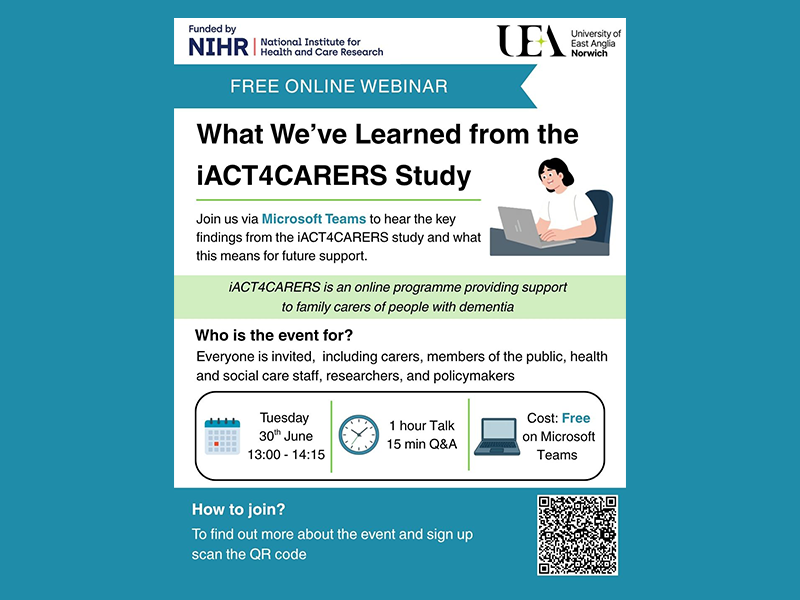
The Study team at the University of East Anglia are hosting an online dissemination event (webinar) to share the iACT4CARERS study findings with study participants. It will also be open to anyone with an interest in the research.
Recruitment was highly successful, with the target reached six months ahead of the planned end date. The Study team have now completed all data analyses and have obtained strong evidence demonstrating both the clinical and cost-effectiveness of the online intervention for dementia carers.
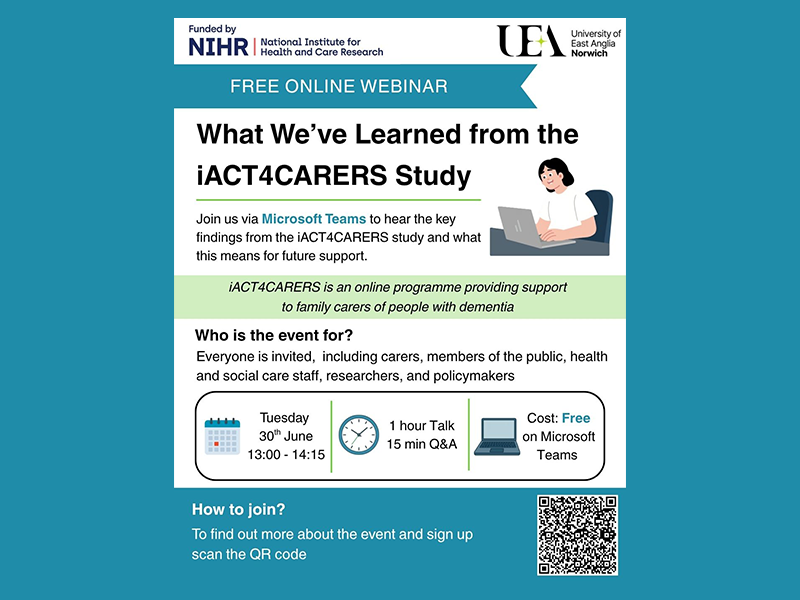
Anyone can register using the link below.
Free Online Webinar: What We’ve Learned from the iACT4CARERS Study
Join our Dissemination Event – 30 June 2026: Click here to register
-

Email m.twigg1@nhs.net -
-
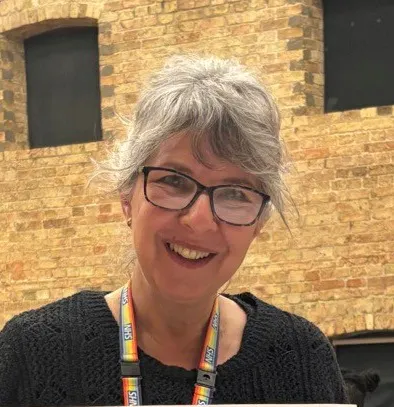
REN Network Chair & Thinklusive