
Health and Care Research
What is health and care research and why is it important?
We are committed to our population living happier and healthier lives. Research is one way that we can make this happen by providing the evidence to improve treatments and care. This could be by testing new medicines or vaccines or by completing questionnaires to help us understand how people feel about the care they receive.
Benefits to taking part in research can include learning more about your health or receiving closer monitoring. Taking part in a project may not always help you directly, but you will be helping to improve services and treatments now and in the future.
Health and care research adds to our knowledge and understanding about diagnoses, treatments and care, and people’s lived experiences. This knowledge helps us to deliver better services and contributes to the best health and wellbeing for people. Publishing the learning from research widely can positively impact health and care locally, regionally, nationally and internationally.
There is a specific need to increase the diversity of people who get involved in research, both as research recruits, and in study design. We know there is a prevalence of white, older people who get involved in research. Without diverse participants in research, there is a risk that research outcomes will not be as effective across diverse population groups and that research trials will not be designed to meet the needs of a diverse population.
Research Engagement Network
The Research Engagement Network supports and champions the involvement of patients and the public in research, working with volunteers and Voluntary, Community, Faith and Social Enterprises (VCFSEs) across all stages of the research process, and providing advice and guidance to researchers on good practice.
The team also work to raise the profile of research to encourage participation in and engagement with research studies by working with local communities. In collaboration with our system partners we are delivering an NHS England funded initiative called Research Engagement Networks (REN).
Our local Research Engagement Network is coordinated by the Norfolk and Suffolk Integrated Care Board (ICB), the Regional Research Delivery Network (RRDN) and in collaboration with Thinklusive.
This initiative creates a platform for researchers to exchange experiences, foster learning and support under-represented groups to participate in research.
The Network:
- Builds a local research environment that is supportive and inclusive for our diverse communities.
- Builds trusting, mutually beneficial relationships with the community and VCFSE sector.
- Listens to, and understands, local communities better.
- Collaborates with community members and organisations to make research more inclusive and representative.
- Highlights the need for making reasonable adjustments within research happening locally.
- Provides a check and challenge to local research teams to create more accessible research.
- Offers input, ideas, and recommendations to teams at all stages of the research process.
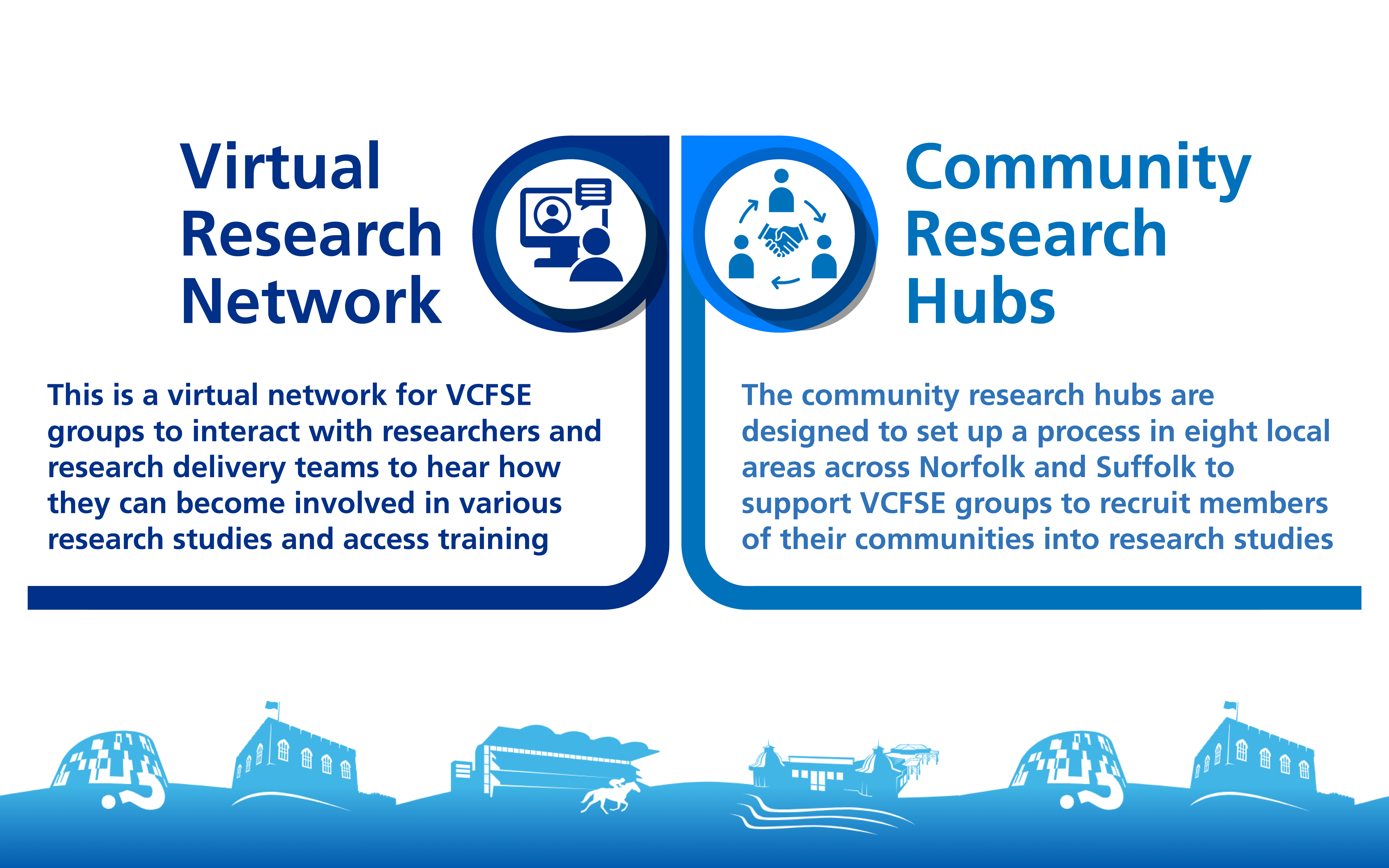
The Research Engagement Network for Norfolk and Suffolk comprise two key elements: the virtual network and community research hubs. These are funded jointly by NHS England and the Regional Research Delivery Network.
Virtual Network
What is it?
This is a virtual network for VCFSE groups to interact with researchers and research delivery teams to hear how they can become involved in various research studies and access training.
What does it do?
The purpose of the network is to highlight research projects to VCFSE groups that are interested in research and to hear from researchers who want to engage with VCFSE groups to enhance their studies.
Max Clark (Thinklusive) chairs a meeting every two months (1 hour, online) to hear presentations from researchers and research delivery teams to highlight relevant research projects to VCFSE groups. Max also regularly shares research projects via email so that VCFSE groups can take part in research if it is relevant to them.
Who can attend and take part?
This network is open to anyone interested in research across Norfolk and Suffolk, working in a VCFSE organisation. You do not have to have any previous experience of research. We know research can be intimidating, and there is usually lots of conversation between colleagues. These meetings are informal, and it is ok to just listen to the conversation.
What do I need to do to join the network?
Please complete the survey below to register to receive emails and the dates of upcoming meetings.
Community Research Hubs
What are they?
The community research hubs are designed to set up a process in eight local areas across Norfolk and Suffolk to support VCFSE groups to recruit members of their communities into research studies. This is important as it makes research more representative of the population and gives access to new treatment approaches that wouldn’t have been available previously.
What do they do?
Each of the hubs is a collection of around three VCFSE groups that have come together to form a core group. Currently, hubs are up and running in Great Yarmouth, Thetford, Waveney, King’s Lynn and Norwich. The VCFSE groups work together with the Integrated Care Board (ICB), Regional Research Delivery Network, Community Action Norfolk and other partners to find ways in which they can recruit members of their communities into research studies or they can support research nurses to run clinics in their community spaces.
To support the hubs, the ICB brings together all partners with the VCFSE groups that are leading each hub once a month to share learning and find out what support is needed.
Who can take part?
Once hubs are established, VCFSE groups in those areas are advised to contact their local hub in the first instance to see how they can get involved. Information on the local hubs can be obtained by contacting nwicb.researchinnovation@nhs.net. We are in the process of establishing three new hubs across Suffolk and the process for this is being led through the virtual network.
Get Involved - Be part of Research
Be Part of Research is a UK-wide service that helps people understand what research is and what it might mean to take part. It also shows what research is currently happening across the UK.
You can create a free account or search for trials and studies into health conditions you’re interested in, at locations near you. See video below for more details. The link to sign up is: https://bepartofresearch.nihr.ac.uk/
-
NIHR webinar: Reviewing Plain English Summaries as a Public Partner
Monday 16 November at 12:00 pm – 1:30 pm
Format: ONLINE WEBINARThis training helps public contributors understand what plain English summaries are, how they are used in research funding applications, and how to provide constructive feedback to researchers. The session includes practical exercises and discussion and has been developed and delivered with an experienced public contributor and researcher.
The aim of the session is to give you the skills and confidence to be a reviewer.
Limited spaces available RESERVE YOUR SPOT and register now:
This session is suitable for those who’ve not yet had the chance to review a plain English summary or those who are already doing this, but may be lacking in confidence.
You will get practical advice from a public partner and researchers who work in patient and public involvement and research. You can have a go at reviewing a plain English summary as part of a supportive team. You will also get a checklist of what to do if you are asked to be a reviewer.
Speakers:
Sue Duncombe: Patient and Public Advisory Group member, NIHR Oxford Biomedical Research Centre
Pradeep Virdee: Senior Statistician/Data Analyst, Oxford Primary Care Department
Polly Kerr: Patient and Public Involvement Manager, Nuffield Dept of Primary Care Health Science, University of Oxford
Angeli Vaid: Facilitator in Training and Public InvolvementTraining content:
• Why public partners should get involved with plain English summary work
• The importance and benefits of a good plain English summary
• What your role is as a reviewer
• What researchers are required to do
• What makes a good plain English summary
• Practical group exercise: Doing a speedy review of a plain English summaryQuestions:
If you have any questions about the training or require adjustments to make this training accessible, please email: Eleanor.goodman@ouh.nhs.uk -
The NHS Patient Entrepreneur Programme (PEP)
Sharing on behalf of Alice Williams, Head of Patient and Public Involvement (NHS England)
We’re delighted to share that applications for Cohort 4 of the NHS Patient Entrepreneur Programme (PEP) will open on 19th October 2026. Applications will close on 20 November 2026,
Find out more and apply: www.nhscep.com/pep
The PEP is a free, 12 month learning and development programme designed for patients and carers who have used their lived experience to develop a healthcare innovation. Delivered through the NHS Clinical Entrepreneur Programme (CEP) and supported by NHS England’s Patient and Public Involvement team, it offers access to:
- CPD-accredited learning and development sessions on innovation pipeline and development topics
- Mentoring and expert clinics
- Business planning, innovation funding and pitching opportunities
- A supportive, inclusive community of innovators
We will also be hosting an application preparation and information webinar on 15 October , 5–6:30pm - open to all who’d like to learn more about the programme. You can register for the webinar here: PEP Prep Application Session 2: Get Application Ready - Understanding the Application Process. | NHS Clinical Entrepreneur Programme
We’d really appreciate your help in spreading the word by:
- Share the opportunity as widely as you can across your patient, community and voluntary sector networks
- Including information about the programme in your newsletters, bulletins, or websites
- Sharing our social media posts or creating your own using #nhsceppatient
Thank you for your continued support in empowering patients and carers to shape the future of healthcare innovation.
-
Join the Health Research Authority Advisory Group
A message from the Health Research Authority
Help shape resources for people deciding whether to take part in health and social care research
We want everyone to have all the information that they need when they are deciding whether or not to take part in health and social care research.
We're working on new resources that will make sure that people have a clear understanding of how they can expect to be treated in research and the safeguards in place to ensure this is the case.
These resources are separate from the participant information you would receive when deciding whether to take part in a research study. Instead, it focuses on the wider expectations, rights and responsibilities that apply across health and social care research, helping people understand how they should be treated throughout their research journey.
Background
We're doing this in response to recommendations from a workshop informed by the Infected Blood Inquiry.
The recommendations asked the Health Research Authority (HRA) to develop a user-friendly explanation of the rights and responsibilities of people taking part in health and social care research, including what participants can expect and how concerns can be raised and responded to.
What’s the activity
To help us to do this project well, and consider different needs and perspectives, we will establish an advisory group who will play a central role in guiding this work.
The advisory group will be made up of 10 members in total including members of Research Ethics Committees, representatives from medical research charities and the pharmaceutical industry.
We are looking for three public contributors to join the advisory group. One of these contributors will also co-facilitate the group.
As part of the group, you may be asked to:
- help us understand what information already exists and what might be missing
- share your views on early ideas and help us decide what would be most useful for patients and participants
- review draft recommendations and resources to make sure they are clear, helpful and meet people’s needs
Members of the advisory group will be invited to share their views on emerging findings from the HRA’s public consultation and provide advice on approaches to community engagement and co-production. The advisory group will help shape the development of resources, ensuring they are accessible and useful for people deciding whether to take part in health and social care research.
You do not need to be an expert in research. We are looking for people who can bring their own views and experiences and take part in open, respectful discussion.
The advisory group will meet online three times between November 2026 and April 2027.
We can offer expenses and honoraria, including £82.50 for each advisory group meeting and related preparation and follow up.
What will be involved?
The activity will involve:
- preparing for the 90-minute advisory group meetings by reading the advisory group meeting agenda and detailed briefing and background documents
- attending briefings with Kirsty Edwards, Policy Manager and the other members of the public supporting this work
- engaging in 3 meetings of the advisory group online. The meetings will take place on Zoom, last 90 minutes, with a 10 minute break and may include breakout groups to support active engagement
- attending a meeting to exchange feedback on your involvement after the 3 advisory group meetings
What difference will my involvement make?
By sharing your views and experiences, you will help us understand what information people need, what might be confusing or missing, and how the resources can be made easier to understand, use and access.
We will let you know how your input has influenced the project. This may include updates during advisory group meetings.
What skills or experience do I need to take part?
- you must be a UK resident with an interest in, or experience of, health and social care research and be able to contribute a public perspective to the advisory group. You do not need any specialist knowledge or expertise in research.
- you should be able to advise on what makes it easier and harder for people from different backgrounds, and with different experiences, to find out about their rights and responsibilities in research and act on these, including raising a concern. For example, you might be a champion or community connector who has supported people to find out about research; or a carer, parent or family member who has supported someone participating in research and found it challenging, confusing or burdensome.
- you should be able to prepare for and engage constructively in online meetings alongside people with different views, experience, and expertise. You will need to read complex documents in advance, join meetings using an appropriate place and technology to do this, with your camera switched on and ensuring the meeting is not heard by others. Please let us know if this might be a barrier for you.
- if you would like to co-facilitate the group, you will need experience of chairing or facilitating meetings or committees where people bring a range of different views, experiences, and expertise.
What support will I receive?
Your point of contact will be Kirsty Edwards, Policy Manager.
As set out in our ways of working, we’ll do our best to give you the information you need to take part. If you have any questions about the activity, please feel free to contact Kirsty - she's here to help.
We’ll ask about any access needs or support requirements, including requests for reasonable adjustments. If there are adjustments we can’t make, we will explain why and work with you to identify alternative support where possible.
While we’ll do our best to facilitate your involvement, our staff aren’t in a position to provide personal support or advice that is not related to the role or opportunity.
If your circumstances change, please get in touch with your point of contact.
How do I apply?
Please provide your answers to the questions in our online form by 9 October 2026
If you experience any problem using the form or would prefer to submit your answers in a different format, please email the public involvement team using ‘online form’ in the email subject line or call us on 020 7104 8161.
How will you decide who will be involved?
We’ll remove your name from your application and shortlist people who have met the criteria above. We will select people to bring together a wide range of experience alongside other members of the advisory group. We will arrange a short online meeting to discuss the activity with you, and check it’s the right fit.
Will I receive payment?
Yes. In line with our payments policy, we can offer:
- £82.50 for attending advisory group meetings, including related preparation and follow up
- £27.50 for attending short pre-advisory group meetings
- £27.50 for short tasks between meetings e.g. reading and commenting on a version of the resources
- an additional £55 per meeting for the co-facilitator, to include briefing and debriefing
Payments are offered in recognition of your contribution to shaping the HRA’s work and do not create an employment contract. We cannot pay for time already funded by another organisation (for example, NHS or university). Participation and acceptance of payment are entirely your choice.
Will my expenses be covered?
Yes. It is our policy to cover reasonable expenses, if agreed in advance. For example, additional childcare or for a carer or personal assistant. We offer a £5 contribution towards any incidental expenses incurred by attending online meetings.
-
Building trust in skin AI: Representation, risk and regulation
 Overview
Join us and share your insights on fairness, privacy, and governance in AI-driven skin imaging and shape the future of the MELODY project.
About this event
Skin conditions affect over half of the UK population each year, making them one of the leading causes of non-fatal disease globally. Advances in artificial intelligence and machine learning, where machines are trained to recognise patterns in data, Artificial Intelligence/Machine Learning (AI/ML) have the potential to aid in the diagnosis and care of such conditions. However, current datasets being used to train ML models lack diversity, leading to healthcare inequalities.
Federated ML, where the data remains separate but the learning can be shared in a single AI model, has the potential to allow researchers access to more widespread, representative dermatology images to train AI which is fairer and more inclusive.
The MELODY project aims to implement and validate federated ML across multiple Trusted Research Environments (TREs) in the UK and initiate the development of a large, diverse repository of skin lesion images that can be used to aid in the detection of skin cancer.
However, it is essential that researchers understand how we should assess representation in the dermatology datasets being used to train AI, and understand how we can quantify, communicate and mitigate the risks of using identifiable dermatology images in a federated system.
We are currently seeking the perspectives of both the public and professionals to shape the future direction of the MELODY project.
Event objectives
This interactive session invites participants to share their perspectives and explore key questions surrounding fairness, privacy and governance in AI for skin imaging to inform the future direction of the MELODY project.
Speakers
James Friel (Health Informatics Centre, University of Dundee)
Dr Rubeta Matin (Oxford University Hospitals)
Elizabeth Preston (Public Member)Who should attend
- Members of the public with an interest in contributing to the development of safe, ethical, and responsible AI technologies for healthcare, particularly dermatology.
- Members of the public interested in dermatology or the use of dermatology images for research.
- Anyone with an interest in equality and diversity in the healthcare space
- People keen to provide feedback on safe AI projects.
- Individuals and organisations interested in AI in Trusted Research Environments (TREs/SDEs).
- Researchers with an interest in AI/ML.
- Professionals working with sensitive/identifiable image data.
- People involved in the decision-making process of projects with AI in sensitive data.
Further details
This meeting will be on Zoom. Please download or update this app before the meeting commences.
You can read more about the MELODY project here.
Sign up for the event here: Building trust in skin AI: Representation, risk and regulation
-
MSD UK 2026 Grants Programme
The second application window of the MSD UK 2026 Grants Programme application window is now OPEN.
https://www.msd-uk.com/partnerships/grants/
"After a successful 2025 programme, we will once again welcome applications from healthcare and patient organisations for arm’s length financial grants. These grants are intended to support the delivery of projects which tackle health inequalities and have a meaningful impact for patients and populations.
Building on the success of last year’s programme and in line with trends in the shifting UK healthcare landscape, we are keen to provide funding support for projects which either: align to a community and neighbourhood care model, are prevention focused, or harness digital innovation to enable healthy living and behaviours.
Learn more about the scope and eligibility of this programme via the link below."
Eligible healthcare and patient organisations have until 5pm on the 8th September 2026 to apply.
-
Using DNA data for life-saving research – public views from the East of England
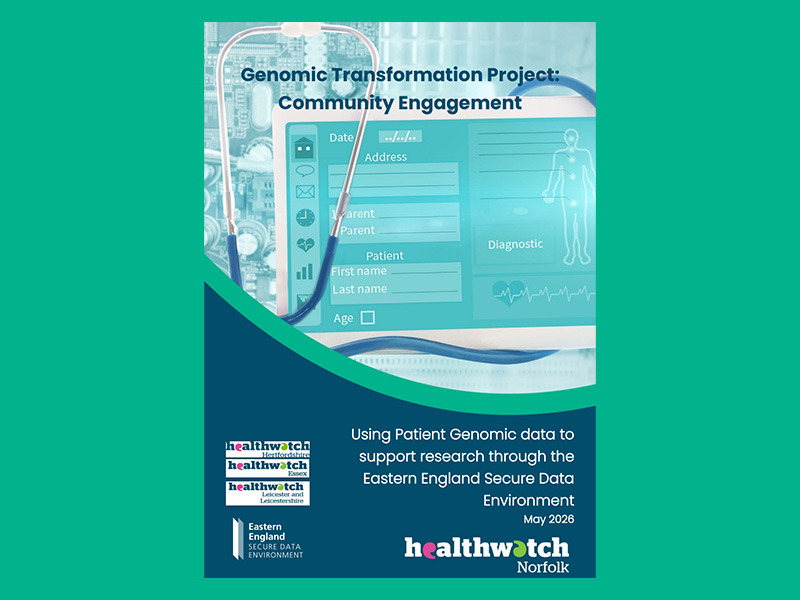
People across the East of England have shared their views on the use of genomic data for health research, recognising its potential to transform diagnosis, treatment and care, according to a new report commissioned by the Eastern England Secure Data Environment (SDE).
Genomic medicine is the study of how the information contained within an individual’s DNA influences their health and wellbeing. This genetic information can help identify a person’s risk of developing certain conditions and provide insights into how they may respond to specific treatments. Advances in genomic science are transforming healthcare by enabling more accurate diagnoses, supporting earlier detection of disease, and facilitating more personalised approaches to treatment and care.
To better understand public attitudes towards the use of genomic data in research, the Eastern England SDE commissioned Healthwatch Norfolk to lead a regional engagement project in partnership with Healthwatch Leicester and Leicestershire, Healthwatch Hertfordshire and Healthwatch Essex.
The project explored people’s views on the use of DNA data generated through routine healthcare for research within the Eastern England SDE. An SDE is a highly-protected digital platform that allows approved researchers to access sensitive health data securely, ensuring patient confidentiality.
Currently, genomic data used in research relies on opt-in consent, which limits how much data is available. A shift towards using the existing NHS opt out model (already used for other health data) for genomic research in an SDE, would allow much more data to be looked at, enabling faster, more impactful research.
The Healthwatch report, Genomic Transformation Project: Community Engagement, captures the views of 85 patients and members of the public, gathered through focus groups and a regional public panel. It explores attitudes towards the use of genomic data within the Eastern England SDE and the consent around the use of that data.
Findings:
- Public support for using genomic data in research is strong, so long as safeguards, transparency and choice are in place
Participants consistently highlighted the significant benefits of genomic research, particularly in improving outcomes for cancer and rare diseases and advancing medical breakthroughs.
However, support depends on trust, security and transparency, with many noting they would want to see robust data protection in place and clear information about consent and how the data is used.
- Public awareness of genomic research and SDEs is low
Many participants had limited knowledge of how genomic data is used in research and were unfamiliar with SDEs.
- Genomic data is seen as particularly sensitive
Participants described genomic data as more sensitive than other types of health information, because of its unique connection to each individual and its capacity to reveal information about family members.
The study found that while people were most comfortable with data being handled by trusted NHS organisations, there was significantly less trust in commercial and external bodies.
It was also emphasised that any future contact about research should come through recognised NHS channels, such as GPs or hospitals.
- Consent and choice remain key for patients
The current opt-out model for NHS data was broadly accepted by participants, however this acceptance depends on people being clearly informed about the opt-out processes.
Across all of the engagement, participants highlighted the need for better communication and greater transparency, with clear explanations of how their data is used, who has access to it and updates on what the research has achieved.
Based on the findings Healthwatch Norfolk have made a series of recommendations, including:
- Increase public awareness of genomic data use
- Strengthen transparency and accountability
- Make opt-out options clearer and easier to access
- Demonstrate robust data security and governance
- Use trusted NHS communication channels
- Continue ongoing public engagement around the subject of genomics research and SDEs
The findings show that there is clear public support for the use of genomic data in health research, however this support is not unconditional. It depends on maintaining public trust through strong safeguards and transparent processes. Prioritising openness, strengthening awareness, and continuing to involve patients and communities in decision-making can ensure that genomic research develops in a way that is both ethically robust and publicly supported.
Download the full report here
-
The NHS Innovation Accelerator Fellowship Programme
Applications for the NHS Innovation Accelerator Fellowship Programme are now open, supporting the next generation of innovators in developing solutions that could transform people's lives and improve the systems that support them.
Applications are now open for the 2027 cohort!
Do you have an innovation with the potential to transform healthcare and the evidence to show it works?
"We are looking for ambitious innovators ready to scale their impact across the NHS.
For our 2027 cohort, we’re particularly interested in innovations that can contribute to priorities across access, productivity, modern service frameworks, women’s health and dementia."
If you’re ready to take your innovation to the next level, find out more and apply now: https://nhsaccelerator.com/about-the-nia-programme/apply-for-nia-fellowship/
📅 Applications close 27 September 2026 -
AI in the NHS 2026
 AI in the NHS 2026: Online, Thursday 15 October 2026, 10.00–17.00
An event from the Health Foundation.
2026 is set to be a pivotal year for AI in the NHS, with important national strategies and regulatory reforms expected that will impact what kinds of technologies get used and how the health service adopts and oversees them.
But turning the vision of an AI-enabled health system into reality won’t be straightforward. Our third annual AI event will bring together stakeholders from across the NHS, government, industry, academia and the charity sector to consider how the NHS can responsibly, safely and effectively implement AI at scale.
This full day event will explore how to:
- translate national strategy into real-world implementation
- evaluate and scale AI tools rapidly, safely and effectively
- build trust among clinicians, patients and the public
- support the workforce through technological transformation
- learn from leading international health systems already using AI at scale.
Confirmed speakers include:
- Dr Joseph Alderman, Postdoctoral Researcher in AI and Digital Health, University of Birmingham
- Brian Anderson, Chief Executive, Coalition for Health AI (CHAI)
- Dr Ricardo Baptista Leite, Chief Executive, HealthAI
- Wonchul Cha, Chief Information Officer, Samsung Medical Centre, Korea
- Dr Jennifer Dixon DBE, Chief Executive, The Health Foundation
- Professor Mary Dixon-Woods, Director, THIS Institute
- Saira Ghafur, Digital Health Lead, Institute of Global Health Innovation, Imperial and Co-Founder & CMO, Prova Health
- Bob Klaber, Director of Strategy, Research & Innovation, Imperial College Healthcare NHS Trust
- Davina Lim, Director, Future Systems & Innovation, Ministry of Health, Singapore
- Ed Middleton, Interim Director of Strategy, MHRA
- Madhumita Murgia, AI Editor, Financial Times
- Micky Tripathi, Chief AI implementation officer, Mayo Clinic
- Anna Thomas, Founding Director, Institute for the Future of Work
Register for a place here: https://thehealthfoundation.zoom.us/webinar/register/3017824745512/WN_MQdBKUWRQ_6WQYTfJHNVwQ#/registration
-
The Single Patient Record in England – vision and reality
use MY data is hosting a public webinar on the single patient record – free to attend and open to all! Read below for more information:
Free, public webinar - Wednesday, 30 September 2026, 13:30 to 15:00
On 30 September, 13:30 to 15:00 use MY data will host a webinar on the Single Patient Record (SPR). This is the latest in our series of public events focussed on the use of patient data and designed to bring together a wide range of voices, under our strategy of positive engagement.
We have heard direct from use MY data Members and members of the public that there is confusion about the role and purpose of the SPR, which is leading to a loss of confidence in the use of patient data.
The SPR is being conflated with the Federated Data Platform (FDP) and this has already led to opt-outs for research & planning in England. We do not want opt-outs to increase as a result of the confusion. With this webinar we want to bring clarity, transparency and above all, patient voices to the discussion.
Although the SPR is an England-only initiative, our webinar will have a UK focus. We will be hearing from the devolved nations about their own work to unify patient records and what England could learn from their experiences.
Please join us and bring your voice to the discussion!
Sign up to webinar here: The Single Patient Record in England – vision and reality
-
IRIS BEAT (Improving Retention In Studies - BEhavioural Activation Toolkit)
Shared by Beth Fordham, a health psychologist at the Kadoorie Institute of Trauma, Emergency and Critical Care in the University of Oxford.
"We run clinical trials to decide how best to care for people when they experience a trauma, emergency or critical injury. We have looked at our data over the past few years and noticed that people who live in areas of high social deprivation are more likely to drop out of clinical trial research. This means that the voices and feedback of this community are under-served and not represented in the healthcare decisions for trauma, emergency and critical care."
"My project would like to hear from people who live in areas of high socioeconomic deprivation and understand if we can change the way that clinical trial research is conducted to make it easier for people to remain in clinical trials and make the findings more representative of the UK population."
"The project is called IRIS-BEAT (Improving Retention In Studies - BEhavioural Activation Toolkit). We used the Governmental Indices of Multiple Deprivation map tool to identify geographical locations of high deprivation, such as Gorleston. We would like to link up with a community stakeholder. The idea is for the community stakeholder to recruit up to ten people from the local community to attend a focus group. We would like the community stakeholder to facilitate the focus group, with support from our researcher. The idea behind it is that, if there is a mistrust of healthcare systems and/or academic institutions, then this might provide a barrier to open discussion in the focus group. If a trusted local champion, i.e. a foodbank coordinator, was leading the group this might invite more open and important discussions."
"We anticipate running these groups from January 2027 in a local venue, which is easy for people from the community to reach, or if preferrable, we can run them as online focus groups."
"We would like to reimburse the community stakeholder for their time contributing to this research. In line with national guidance, we offer £27.50 per hour."
For more information, please email beth.fordham@ndorms.ox.ac.uk
-

Email m.twigg1@nhs.net -
-
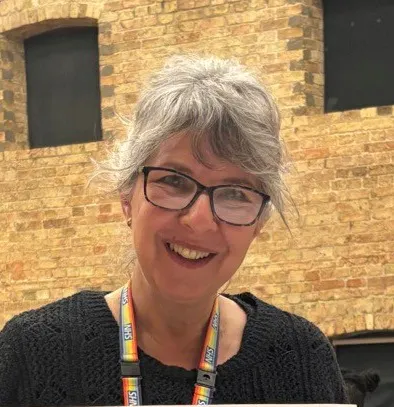
REN Network Chair & Thinklusive