

Using DNA data for life-saving research – public views from the East of England
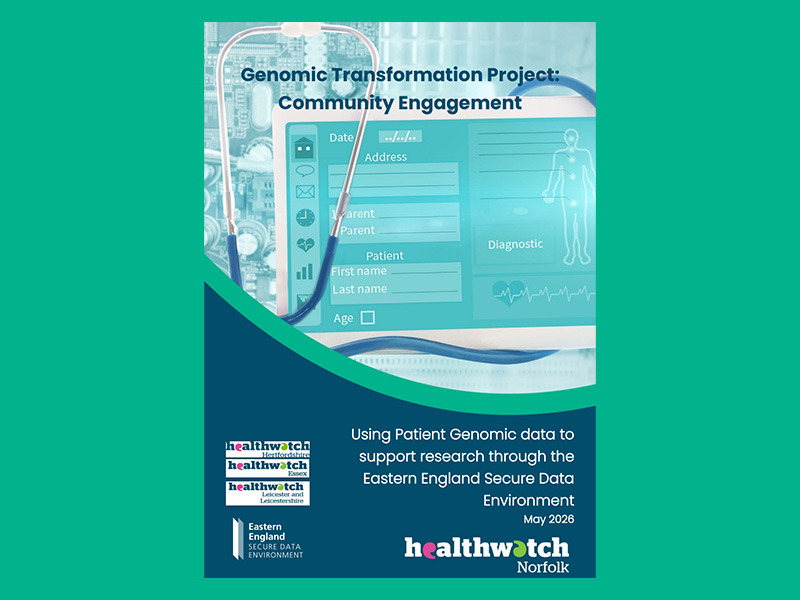
People across the East of England have shared their views on the use of genomic data for health research, recognising its potential to transform diagnosis, treatment and care, according to a new report commissioned by the Eastern England Secure Data Environment (SDE).
Genomic medicine is the study of how the information contained within an individual’s DNA influences their health and wellbeing. This genetic information can help identify a person’s risk of developing certain conditions and provide insights into how they may respond to specific treatments. Advances in genomic science are transforming healthcare by enabling more accurate diagnoses, supporting earlier detection of disease, and facilitating more personalised approaches to treatment and care.
To better understand public attitudes towards the use of genomic data in research, the Eastern England SDE commissioned Healthwatch Norfolk to lead a regional engagement project in partnership with Healthwatch Leicester and Leicestershire, Healthwatch Hertfordshire and Healthwatch Essex.
The project explored people’s views on the use of DNA data generated through routine healthcare for research within the Eastern England SDE. An SDE is a highly-protected digital platform that allows approved researchers to access sensitive health data securely, ensuring patient confidentiality.
Currently, genomic data used in research relies on opt-in consent, which limits how much data is available. A shift towards using the existing NHS opt out model (already used for other health data) for genomic research in an SDE, would allow much more data to be looked at, enabling faster, more impactful research.
The Healthwatch report, Genomic Transformation Project: Community Engagement, captures the views of 85 patients and members of the public, gathered through focus groups and a regional public panel. It explores attitudes towards the use of genomic data within the Eastern England SDE and the consent around the use of that data.
Findings:
- Public support for using genomic data in research is strong, so long as safeguards, transparency and choice are in place
Participants consistently highlighted the significant benefits of genomic research, particularly in improving outcomes for cancer and rare diseases and advancing medical breakthroughs.
However, support depends on trust, security and transparency, with many noting they would want to see robust data protection in place and clear information about consent and how the data is used.
- Public awareness of genomic research and SDEs is low
Many participants had limited knowledge of how genomic data is used in research and were unfamiliar with SDEs.
- Genomic data is seen as particularly sensitive
Participants described genomic data as more sensitive than other types of health information, because of its unique connection to each individual and its capacity to reveal information about family members.
The study found that while people were most comfortable with data being handled by trusted NHS organisations, there was significantly less trust in commercial and external bodies.
It was also emphasised that any future contact about research should come through recognised NHS channels, such as GPs or hospitals.
- Consent and choice remain key for patients
The current opt-out model for NHS data was broadly accepted by participants, however this acceptance depends on people being clearly informed about the opt-out processes.
Across all of the engagement, participants highlighted the need for better communication and greater transparency, with clear explanations of how their data is used, who has access to it and updates on what the research has achieved.
Based on the findings Healthwatch Norfolk have made a series of recommendations, including:
- Increase public awareness of genomic data use
- Strengthen transparency and accountability
- Make opt-out options clearer and easier to access
- Demonstrate robust data security and governance
- Use trusted NHS communication channels
- Continue ongoing public engagement around the subject of genomics research and SDEs
The findings show that there is clear public support for the use of genomic data in health research, however this support is not unconditional. It depends on maintaining public trust through strong safeguards and transparent processes. Prioritising openness, strengthening awareness, and continuing to involve patients and communities in decision-making can ensure that genomic research develops in a way that is both ethically robust and publicly supported.
Download the full report here

Thank you for your contribution!
Help us reach out to more people in the community
Share this with family and friends